Wednesday, 20 June 2012

Manzanilla sherry: Two places, two prices…two wines?


Oscar Wilde defined a cynic as someone who knows the price of everything and the value of nothing. Well, I now know of two wildly differing prices of manzanilla sherry – what does that mean for its value?

My own recent holiday was to the Andalusian area of Spain, and as CJ so artfully expressed it, holiday drinking rules applied. I was looking forward to exploring the wines of the region. (Well, when I say “exploring”, I suppose I do mean, er, “drinking”…)

I particularly wanted to “explore” their sherries. At one point, I had even planned to visit and tour one of the bodegas in Jerez – but I was put off by a number of online reports that such tours are basically a tourist rip-off, a quick tour of Disney-fied facilities followed by a brief snifter (with overpriced tapas) and, as Banksy would have it, Exit via the gift shop.

(Although why I would trust such online sites I don’t know, since their reviews of Seville’s fabulous bars often consisted of ignorant criticisms such as “the fish came without vegetables”, or, in one memorable instance, “they didn’t speak English”. Someone even complained that the barmen didn’t smile enough. Never drank at the Coach & Horses, then…?) 

In fact, I found it perfectly satisfactory to “explore” sherries from the right side of a bar. And what really struck me was the huge, the colossal, the perception-altering difference in price between Spain and England.

I first encountered manzanilla sherry as a chilled aperitif at Fino, one of the best Spanish restaurants in London. There, La Gitana manzanilla is £4.50 for a 100ml glass, which equates to more than £33 a bottle. Manzanilla has gorgeous crisp, clean nutty flavours and a bouquet of sea air, and even when I realised I could buy a bottle from merchants for less than a tenner, I still treated it with respect, poured modest measures, and regarded it as a luxury.

But in Seville, I found that it was regarded as just another wine. And after realising that I was being charged just €1.50 or so for a large glass of manzanilla in the bars, I thought I should check the prices in a Seville supermarket. 

Well. Las Medellas, which I bought from The Wine Society  for £6.95, was €4.33 a bottle in Seville – that was £3.50. La Gitana, which Majestic list at £8.99, was €4.85 a bottle – £3.92. And La Guita, which Vinoteca in London sell at £12.50 a bottle, was just €5.10 – £4.12 a bottle.

So what this comes down to is that in London, I am paying between twice and three times what the identical bottle of manzanilla costs in Seville.

Of course, you’ll say, there’s the duty that HMRC places on a bottle of wine; a higher rate of VAT; and the cost of shipping the stuff over from Spain; along with a chain of intermediaries who all want to make a profit. But still…three times the price?

And the thing is, I’m rather thrown. There have been proper research studies which confirm that a knowledge of price, along with things like label design or name, alter our perceptions of a wine. Of course they do. Just like a painting; we can’t help but be influenced in our judgment by where we encounter it, who has made it and what it costs.

So…what is manzanilla? A relatively expensive aperitif – or a wine for under four quid a bottle?

It’s my Champagne vs CJ’s Cava all over again – only in this case, it’s exactly the same wine.

How is a travelled, man of the world supposed to react authentically to a glass of manzanilla? Am I serving an expensive wine,  quite a specialist drink, bit of a treat, served in a smallish glass and a bit pricey, actually… 

Or, to people in the know, to proper men of Europe,  is it something cheap, that’s supposed to be knocked back, to accompany an entire meal, something to serve in a regular wine glass, no need to stint, and downed like any other cheap wine, “Oh, don’t you know the authentic thing is just to glug the stuff…”

In other words, is the whole character of the wine, and the way you regard and treat it, inevitably altered by its price?

Ironically, of course, the manzanilla at the cheap price in Seville actually tasted better – because a far more significant influence than the price was the fact that I was drinking it standing in the crowd at El Rinconcillo, the oldest tapas bar in the world, with hams hanging from the ceiling, your tab chalked up on the counter, fabulous little tapas dishes, and a noisy, bustly atmosphere. 

(My own experience was not remotely dented by the fact that the barman neither spoke English, nor smiled like a well-trained “Counter Person” from the Stepford branch of KFC.)

Having enjoyed what I can only describe as the low-price, high-value manzanilla experience of Seville, I wanted to bring some of these bargains home. But flights being what they are nowadays, I had to put the three bottles I bought into my check-in luggage. Necks protected with balled-up dirty socks, bottles encased in…dirty socks (we did a lot of walking, alright?). Each bundle rolled into grubby shirts, then plastic bags, and the bases placed into shoes. With enormous trepidation I undid my suitcase upon arrival, anticipating shards of glass and clothing awash in sherry, thankfully to find three successfully intact bottles – bearing a faint odour of socks…

So now, I am well stocked with manzanilla. But I don’t know what I’m serving. People will assume my La Guita is expensive, sipping manzanilla – but my La Guita is actually cheap, glugging manzanilla. Isn’t it?

The only giveaway is the fading odour of dirty socks…

PK

Wednesday, 13 June 2012

What I Drank On My Holidays: Badoit


So we went away to Lombardy and the South of France, and, yes, it was as nice as it sounds, and yes, it is hell to be back. And one reason why it was indeed so very nice, was because holiday drinking rules applied, and we all know what that means, the gallimaufry of unfamiliar taste sensations plus overwhelming sentimental light-headedness as the sun sets over the lake, conspiring to fuddle the senses benignly and persistently, causing one to leap to certain new and suddenly unshakeable conclusions, among them

- The only wines worth drinking are Italian. This is on the basis of a bottle of something called, seriously, Crapulone, a red from Lombardy; a rosé called Roselario, also from Lombardy; and a supermarket Chianti from the Como branch of Carrefour which cost only €4 and was nonetheless approximately twice as good as a £4 bottle of British Chianti would have been. The first two were a bit more upscale - that holiday effect - and, as PK would put it, elegant, supple and full of finesse in a way I just don't associate with other wines, wherever they're from. I mean, they weren't especially long on narrative but then narrative is over-rated anyway, just another excuse for excessive buttonholing and finger-wagging and gusts of alcohol and tannins, so, yes, Italy brings delight, brings leggerezza although, meanwhile

- In the Carpentras region of Southern France, staying subsequently with our grand friends who have a house over there, we knocked off (one evening) a couple of bottles of red made by some of their neighbours, and this stuff was spicy, black as ink, extremely tasty, 14.5%, and gave us immense hangovers the next morning. 'I haven't felt like this since I was sixteen,' we all said, shielding our eyes with our hands. A safer wine turned out to be a fantastic Côtes du Rhône Villages, like the Chianti a mere €4, this time from the local SuperU, but tasting, to my way of thinking, well up there with £15+ bottles such as chumps like us are forced to buy in this country

- But either way, great joy of supermarket buying: in Italy, scores (just enough, not too many) of very moderately-priced Italian wines and nothing but Italian wines; in France, scores (just enough) of very moderately-priced French wines and nothing but French wines, all lined up in uniform ranks like the Armée de Terre, the sheer pleasure of having pointless excessive choice taken out of your hands, leaving you free to gawp in a relaxed manner while swarthy men push their trolleys past and women with violent rust-coloured hair con the household cleaners

- And yet, even with all that going on, what was the single most memorable drink of the trip? I don't want to get too Bruce Chatwin about it, but strictly speaking, it was a glass of cold fizzy Badoit with a slice of lemon in it, which I drank after we'd been walking around the Dentelles de Montmirail (blazing sunshine, honey aroma of flowering broom, shedload of vineyards dazzling in their June foliage, not that I want to get all Chatwin, obviously) before finding a tiny café in the shade. The Badoit was about the sweetest thing I can remember drinking, generating small but audible gasps of satisfaction as it went down. There you go. Which means what? That cold and fizzy beats room temperature and still? That water trumps wine? Actually, it means the bloke running the tiny café really knew how to stiff any passing tourists: my small Badoit bottle ended up costing me €2.50. There, indeed, you go

CJ


Thursday, 7 June 2012

Wine for good friends? - Mondelli Montepulciano d'Abruzzo

These wines – they do like to try and dictate their terms and conditions, don’t they? We’ve been told to drink wines with particular foods; and instructed to drink wines with particular events, like barbeques or celebrations. Now, an encounter with a wine to drink with particular people.

Returning from holiday, a supermarket trip was required, in order to replace the fridge’s impressive accrual of fur balls and petri dish cultures. I had previously remained as oblivious as Mr Sainsbury no doubt intended to his offering of Mondelli Montepulciano d’Abruzzo at its absurd original price of £7.99 – but here it was, triumphantly offered at a £3.99 reduction to just £4.

Now, unlike CJ – a living example of the triumph of hope over experience –  I do not have high expectations for a £4 wine. £4 a glass possibly – £4 a bottle, no.

But what intrigued me into purchase was the message on the back label: “Perfect served with good friends…”.

Let’s not waste time attempting to distinguish between “friends” and “good friends”. I do, however, recall a Cambridge chap of whom it was said that he treated everyone as if they were his oldest friend – which was all very well, unless you were his oldest friend.

What intrigues me is whether the notion of a wine to serve with “good friends” is intended to raise expectations – or to lower them.

What exactly am I supposed to be doing with these “good friends”? Well, further clues are offered on the back label, presumably for those of us who don’t know how to entertain our friends. I’m to be serving them “pizza, hearty pasta dishes and hard cheeses”. Not the kind of evening for which I’ll be polishing the silver, then. Sorry, friends.

And clearly therefore not an evening designed to flatter or impress one’s guests. Not the occasion for a prospective employer, say, or father-in-law. So by which logic would I inflict this wine upon my “good friends”? 

Is it that my “good friends” will accept a pizza and some £4 vino, because I don’t have to impress them; because they accept me, as the saying has it, warts and all? (We’ll see about that, when I remove my socks at the dinner table to discuss my verrucas…)

Is it that, while pets cower and neighbours complain about the volume, the banter and bonhomie between us should be so entertaining that we’re all rendered oblivious to the quality of the wine?

Or, since the label describes it as “easy drinking”, and the volume that can be consumed at only £4 a bottle so enormous, that never mind distinguishing good wine from bad, my “good friends” will be incapable of distinguishing night from day?

In point of fact, this is far from easy drinking; it was actually a considerable challenge, from its ominously bruise-like colour onwards. It may at some point have had a passing relationship with a grape, but its insipid flavour is swept away on an fierce, industrial blast of alcohol, leaving just an unpleasantly bitter aftertaste. Mrs K observed that this was the first wine she had ever seen me pour back into the bottle; a comment, I feel, potentially as critical of myself as the wine.

So let’s get this Mondelli proposition straight. I’m inviting our “good friends” around. So I get in a pizza, some hard cheese, and some really acrid, cheap wine, that leaves my guests feeling they’ve inhaled CS gas. And tonight we’ll merry be.

Well, if only so that Mrs K and I can maintain something of our social circle, may I declare that I am completely unconvinced by this notion of provision to one’s “good friends”. Or even to those ranked above the dizzy social heights of our “casual acquaintances”. Frankly, I wouldn’t serve this wine to even random visitors like meter readers. 

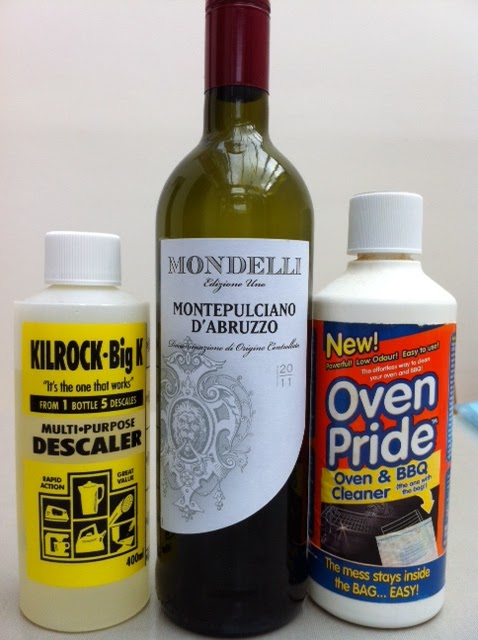
It’s been stored (see picture) where it belongs. Rest easy, good friends.

PK